Bridging the IT-OT Gap in Indian Manufacturing: How KOPL Intelligence Is Changing the Game
Why the disconnect between shop-floor data and boardroom dashboards is costing Indian manufacturers billions — and how agentic AI is finally closing that gap.
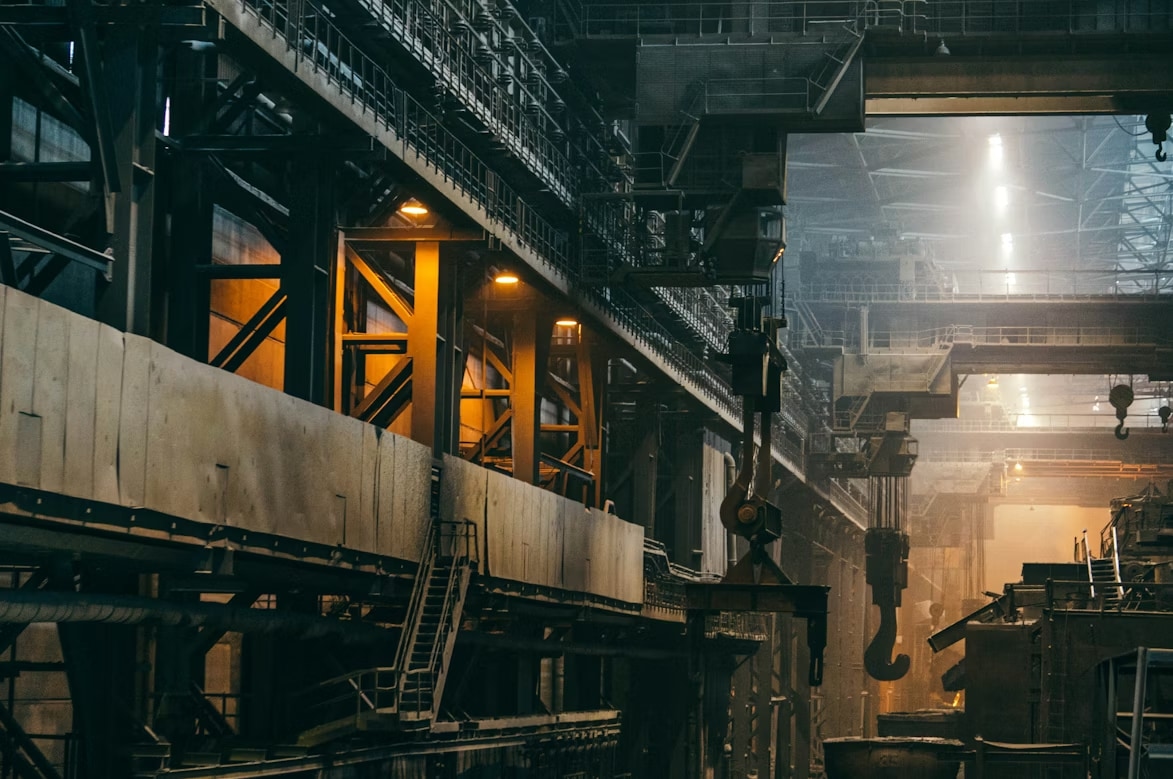
Walk into most Indian manufacturing facilities today and you'll find two worlds that rarely speak to each other. On one side: SCADA systems, PLCs, and DCS controllers generating terabytes of real-time operational data every day. On the other: ERP dashboards, Excel reports, and weekly review decks that management relies on to make decisions. Between them sits a chasm — the IT-OT gap — and it is costing Indian manufacturers far more than they realise.
The Hidden Cost of Disconnected Systems
The problem isn't that the data doesn't exist. It does — in abundance. The problem is that it lives in operational technology (OT) systems that were never designed to talk to enterprise IT infrastructure. Production line anomalies that should trigger procurement alerts don't. Maintenance events that should update ERP job cards don't. Shift handover reports that should feed into quality management systems require three people and two hours to compile manually.
At KOPL, one of India's prominent manufacturing operations, this disconnect manifested as daily reconciliation cycles that stretched across departments, manual data extraction from plant historian systems, and floor managers spending more time compiling reports than managing production. Bottlenecks were discovered reactively — after the damage was done.
What KOPL Intelligence Changed
DSeT's EdgeBay Intelligence platform, deployed as KOPL Intelligence, approached this differently. Rather than building another dashboard layer on top of disconnected systems, EdgeBay created a unified intelligence layer that bridges SCADA, PLC, and sensor data with enterprise IT — in real time.
The key architectural decision: run AI models inside the client's infrastructure, not in the cloud. Manufacturing environments often operate in low-connectivity or air-gapped conditions. A cloud-dependent solution would have been a non-starter. EdgeBay was built for the edge from day one.
Three outcomes stood out immediately after deployment:
- Manual data reconciliation eliminated. What previously required dedicated staff hours is now automated. Real-time data flows from the plant floor to management dashboards without human intervention in the data pipeline.
- AI-flagged production bottlenecks. Instead of discovering bottlenecks in the next shift meeting, floor managers now receive intelligent alerts the moment anomalies emerge. The system doesn't just monitor — it interprets.
- Voice interface for floor operations. Perhaps the most operationally significant feature: floor managers can now query production status, maintenance schedules, and shift performance using a conversational interface. No terminal required. No training barrier.
Agentic AI vs. Dashboard AI
The distinction that matters here isn't technical — it's philosophical. Most industrial AI deployments result in better dashboards. They show you more data, more clearly. EdgeBay was designed around a different premise: AI should act, not just alert.
When a sensor reading crosses a threshold, the system doesn't just illuminate a red indicator. It cross-references historical patterns, assesses downstream impact, checks maintenance schedules, and surfaces a prioritised recommendation — all in seconds. This is what agentic execution looks like in an industrial context.
What This Means for Indian Manufacturing
India's manufacturing sector is at an inflection point. The push toward Industry 4.0, combined with competitive pressure from global supply chains, means the IT-OT integration challenge is no longer a future consideration — it's a present urgency. Operations that continue to run on manual reconciliation and reactive maintenance cycles will find themselves structurally disadvantaged.
The KOPL Intelligence deployment demonstrates that this transformation doesn't require ripping out legacy systems or multi-year migration programmes. The right platform connects to existing SCADA, PLC, and DCS infrastructure and starts delivering intelligence within weeks.
The IT-OT gap is a solvable problem. The tools exist. The question is whether your organisation is ready to close it.
DSeT's EdgeBay Intelligence platform is purpose-built for industrial OT environments. To explore how it applies to your operations, book a strategic demo at dsetconsulting.com/contact.
Stay ahead of the curve
Get DSeT Insights delivered to your inbox — strategy, AI, and digital transformation.
Found this useful?
Share it with your network on LinkedIn.
See IT-OT Unification on Real Factory Data
Understand how KOPL Intelligence bridges your production and business systems — live.